
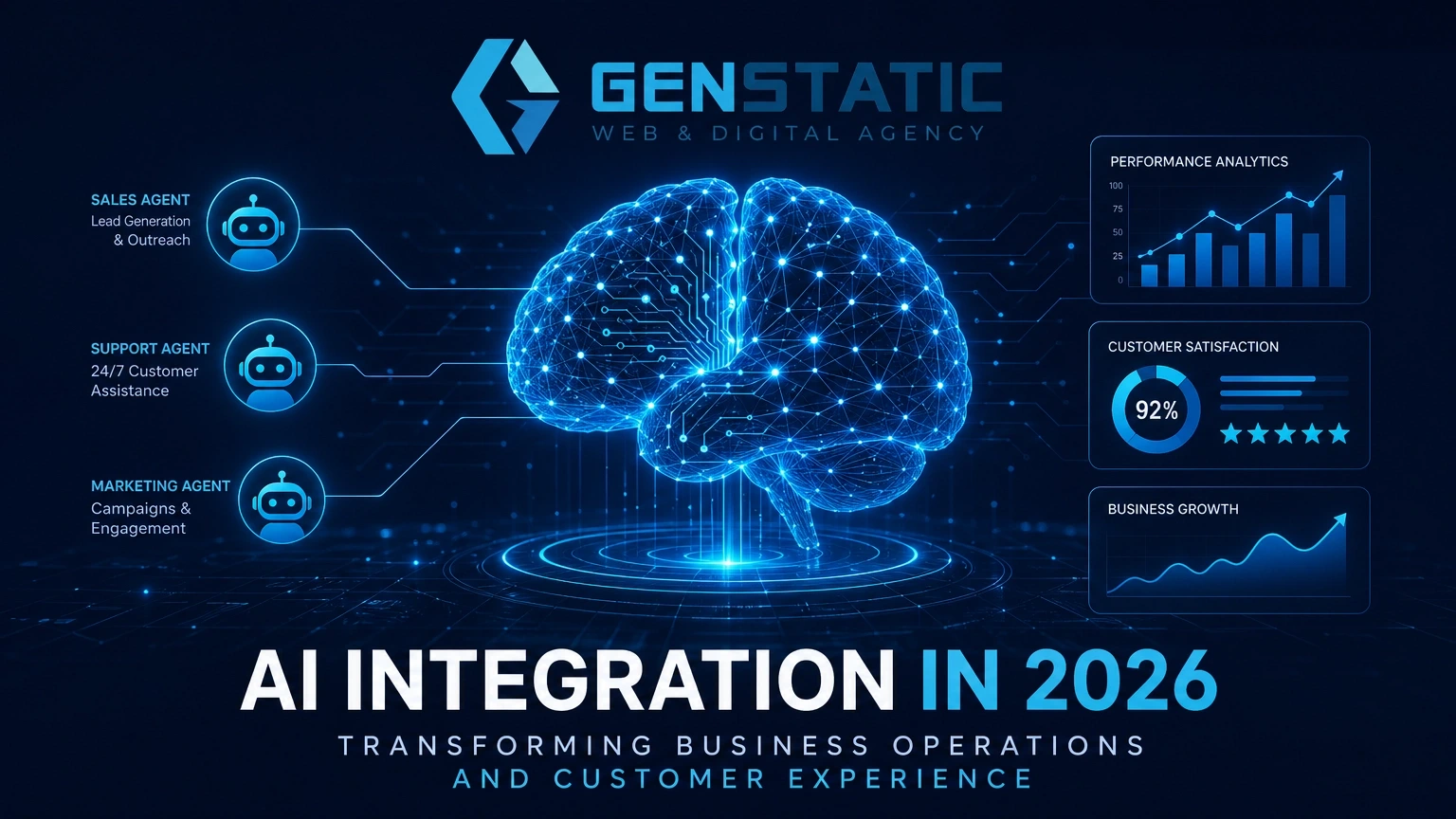
AI Integration in 2026: Transforming Business Operations and Customer Experience
Introduction
Artificial Intelligence (AI) is rapidly evolving from a niche technology to a fundamental component of modern business strategy. In 2026, AI integration is no longer a luxury but a necessity for companies aiming to optimize operations, enhance decision-making, and deliver superior customer experiences. At GenStatic, we empower businesses to harness the transformative power of AI, ensuring they remain competitive and innovative.
1. Agentic AI for Autonomous Optimization
One of the most significant shifts in 2026 is the rise of Agentic AI. These intelligent agents are designed to operate autonomously, performing complex tasks, optimizing processes, and even making decisions without constant human oversight .
- Autonomous Workflows: Agentic AI can manage entire workflows, from supply chain logistics to customer service resolution, learning and adapting to improve efficiency over time.
- Proactive Problem Solving: Instead of merely reacting to data, these AI systems can proactively identify potential issues and implement solutions, minimizing downtime and maximizing productivity.
2. AI-Powered Personalization Across All Touchpoints
AI’s ability to analyze vast amounts of data is driving unprecedented levels of personalization. In 2026, this extends beyond marketing to every customer and employee touchpoint .
- Hyper-Personalized Customer Experiences (CX): AI analyzes user behavior, preferences, and historical data to deliver tailored content, product recommendations, and support, creating a seamless and highly relevant experience.
- Enhanced Employee Experiences (EX): AI tools personalize learning paths, automate administrative tasks, and provide intelligent assistance, boosting employee productivity and satisfaction.
3. AI Governance and Ethical AI Implementation
As AI becomes more pervasive, the importance of AI governance and ethical considerations has surged. By 2026, organizations are treating AI governance with the same gravity as financial auditing or cybersecurity, ensuring responsible and fair AI deployment .
- Transparency and Explainability: Businesses are focusing on making AI decisions transparent and understandable, building trust with users and stakeholders.
- Bias Detection and Mitigation: Robust frameworks are being developed to identify and mitigate biases in AI algorithms, ensuring equitable outcomes.
4. AI in Data Analytics and Predictive Insights
AI continues to revolutionize data analytics, moving beyond descriptive reporting to advanced predictive and prescriptive insights. This allows businesses to anticipate future trends and make data-driven strategic decisions .
- Predictive Maintenance: AI analyzes sensor data to predict equipment failures, enabling proactive maintenance and reducing costly downtime.
- Market Trend Forecasting: Machine learning models process vast datasets to forecast market shifts, consumer behavior, and competitive landscapes, providing a strategic edge.
Conclusion
AI integration in 2026 is about more than just technological adoption; it’s about a fundamental transformation of how businesses operate, interact with customers, and make decisions. From autonomous agents to hyper-personalization and stringent governance, AI is reshaping the digital landscape. At GenStatic, we are at the forefront of this revolution, helping businesses strategically integrate AI to unlock new efficiencies, drive innovation, and achieve sustainable growth.